Chloe, Let's Talk About What's Actually Going On
I want to start by saying something that might surprise you: nothing is wrong with you.
I know that's probably not what it feels like. It probably feels like something is deeply, fundamentally broken. You're lying on the couch after work, thumb-deep in Instagram, watching other people live interesting lives while yours feels like it's on pause. You know you should be doing something -- making videos, planning, building -- but you can't make yourself get up. And then you feel guilty about that, which makes you scroll more, which makes you feel worse, which makes you scroll more. The cycle is exhausting.
But here's the thing I need you to understand before we go any further: your hardware is fine. By hardware, I mean your raw capabilities -- your intelligence, your creativity, your ability to learn and execute and show up. You've worked at VNG for four years. You've navigated the complex politics of working under a boss you respect but deeply dislike. You've traveled internationally. You've made creative videos that even you acknowledge were good. You play pickleball. You manage a marriage. Your hardware works.
What's broken is your software -- the beliefs, assumptions, thinking patterns, and mental models that tell your hardware what to do. And the really insidious part? Most of your software wasn't written by you. It was installed over decades by your family, your culture, your social circle, and two-plus hours a day of Instagram. You're running someone else's code and wondering why the output doesn't feel like yours.
So let's debug it.
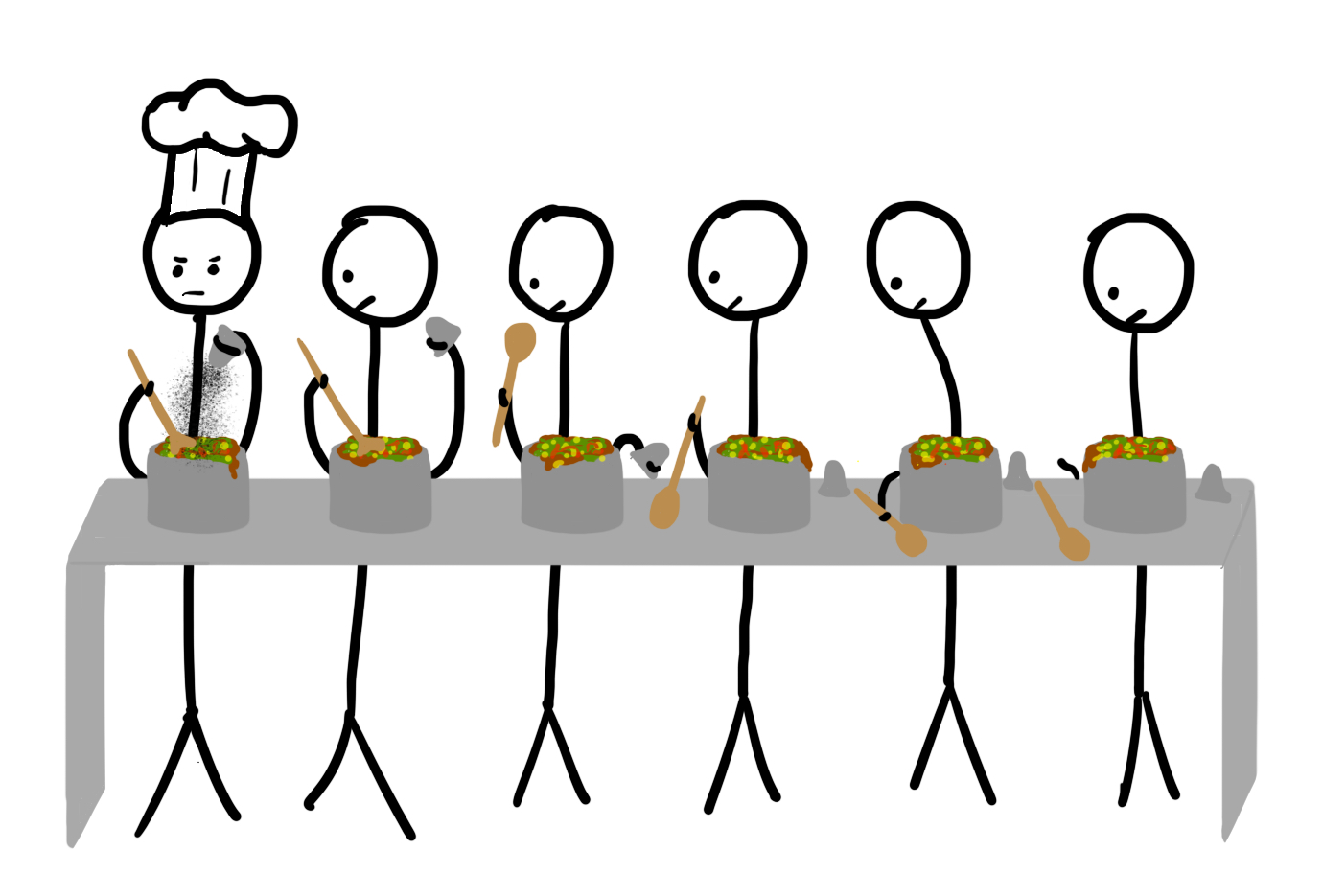
The Cook and the Chef
Tim Urban makes a distinction that I think will fundamentally change how you see yourself and your husband and your entire situation if you really let it land.
A cook follows recipes. They look at what other people have done, find a set of instructions that seems to produce good results, and follow them. Cooks can be very competent -- some of the best restaurants in the world are run by excellent cooks who execute known recipes with precision and care. There's nothing inherently wrong with being a cook.
A chef, on the other hand, reasons from first principles. They start with raw ingredients and a desired outcome, and they figure out -- through experimentation, failure, and iteration -- how to get from one to the other. They might study other recipes for inspiration, but they don't follow them blindly. They understand why each ingredient is there, and they're willing to throw out the whole recipe if it's not working.
Chloe, you have been a cook your entire adult life. And I don't say that to insult you -- I say it because recognizing it is the first step to changing it.
Here's the recipe you've been following:
1. Get a stable job at a reputable company
2. Even if you don't love it, stick with it because stability is valuable
3. Marry someone ambitious and let them build the financial foundation
4. Don't take big risks
5. Accumulate comfort -- nice house, good salary, status markers
6. Do what's expected of you
7. Don't make waves
This recipe was probably handed to you by some combination of family, culture, and observation of other people who seemed to be doing well. And for a while, it worked well enough. The job at VNG was fine. The travel was exciting at first. The conferences were fun. You could tell yourself the recipe was working.
But now the dish is sitting in front of you and it tastes like nothing. You're uninspired. You're numbing yourself every evening. You have this persistent, low-level awareness that you are not living your life -- you're living someone else's idea of what your life should be.
The recipe failed. But instead of questioning the recipe, you're blaming yourself. You're saying, "I'm lazy. I lack discipline. Something is wrong with me." No. Something is wrong with the recipe. You are a cook trying to make a dish that can only be made by a chef.
Your Husband: The Chef You Resent
Let's go there, because I think this is the most important thing we'll talk about.
Your husband spent roughly a decade building a startup. Think about what that means. Ten years of uncertainty. Ten years of waking up without a guaranteed paycheck, without a clear recipe, without someone telling him what to do next. He had to reason from first principles every single day: What are we building? Why? What's working? What isn't? How do we adapt?
The startup ended unfavorably. In cook terms, the recipe failed. But your husband didn't react the way a cook would. A cook would say, "Well, that proves I should have followed the stable-job recipe all along." Your husband, operating as a chef, said something more like, "That experiment produced valuable data. What's next?"
He got a new job. Five weeks in, he's quitting. From the outside -- from the cook perspective -- this looks irresponsible, flighty, even selfish. And I understand why it frustrates you. You're looking at this thinking, "I've been at VNG for four years doing work I hate, and he can't even stick it out for two months?"
But here's what's actually happening: he's iterating. He tried the job, collected data (it's not right), and is making an adjustment. That's the feedback loop in action. That's chef behavior. It's uncomfortable to watch because it violates the recipe -- the recipe says you get a job and you stay -- but it's how people who end up building lives they love actually operate.
And here's the part that I think will be uncomfortable to sit with: you resent him for the very quality you most need to develop.
You wish you had dreams to pursue. But Chloe, you do. You want to create content. You want to move to NYC. You want a life that lights you up. The difference between you and your husband isn't that he has dreams and you don't. It's that he gives himself permission to chase his, and you don't give yourself permission to chase yours.
And the cruelest twist: you want him to stop being a chef and become a cook. You want him to get the stable job, provide the comfortable life, give you the nice house. You want him to follow the recipe. But if he did that -- if he became the stable, predictable, recipe-following provider you say you want -- you would lose the very thing about him that's most valuable to you right now: a living, breathing example of what it looks like to reason from first principles about your own life.
The Want Box: Untangling What You Actually Want
Let's get into the mechanics of how this works.
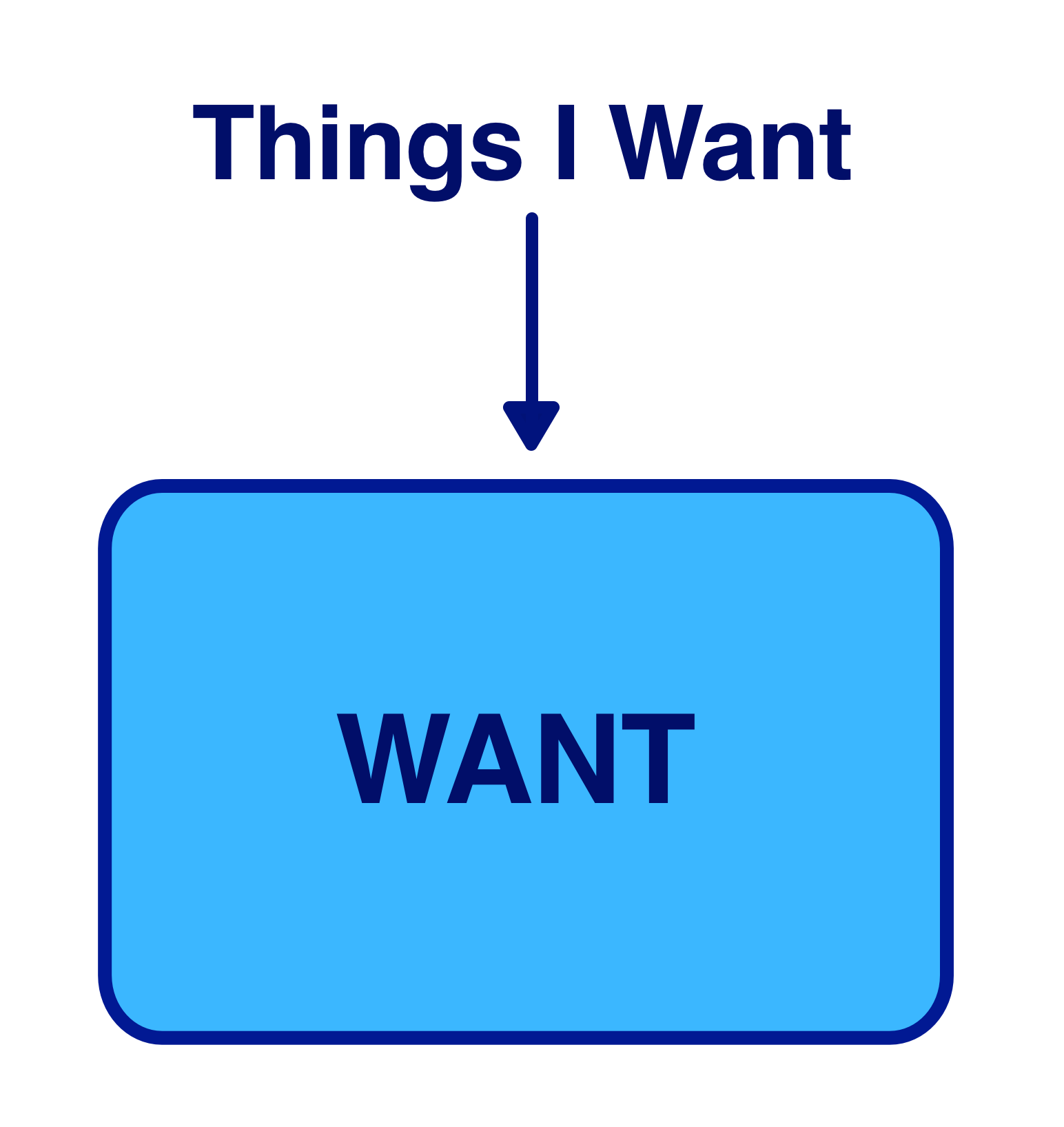
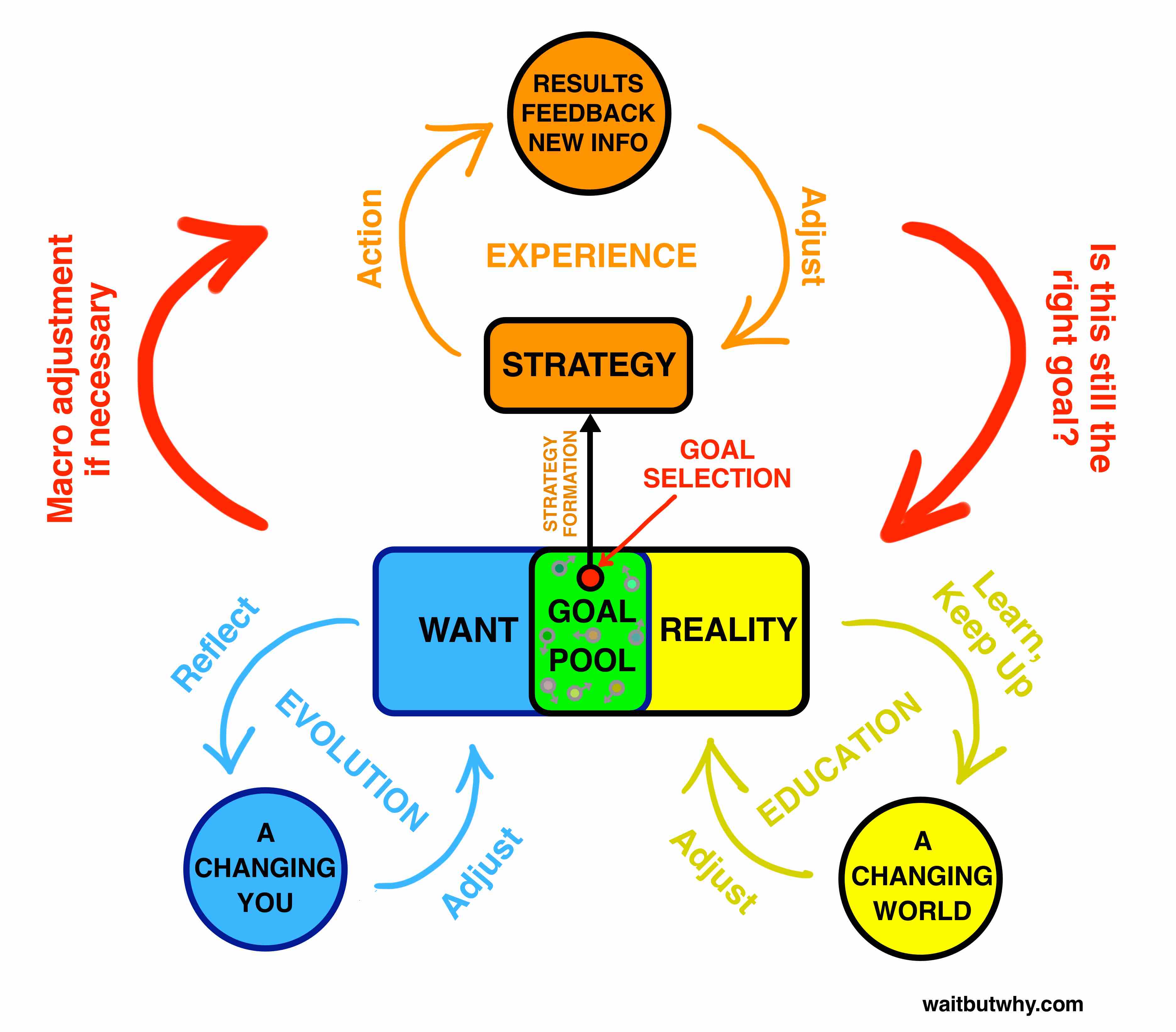
Imagine you have a box called the Want Box. This box is supposed to contain your actual, examined, deeply-felt desires. The things that, when you imagine having them, produce genuine excitement and meaning -- not just relief or safety.
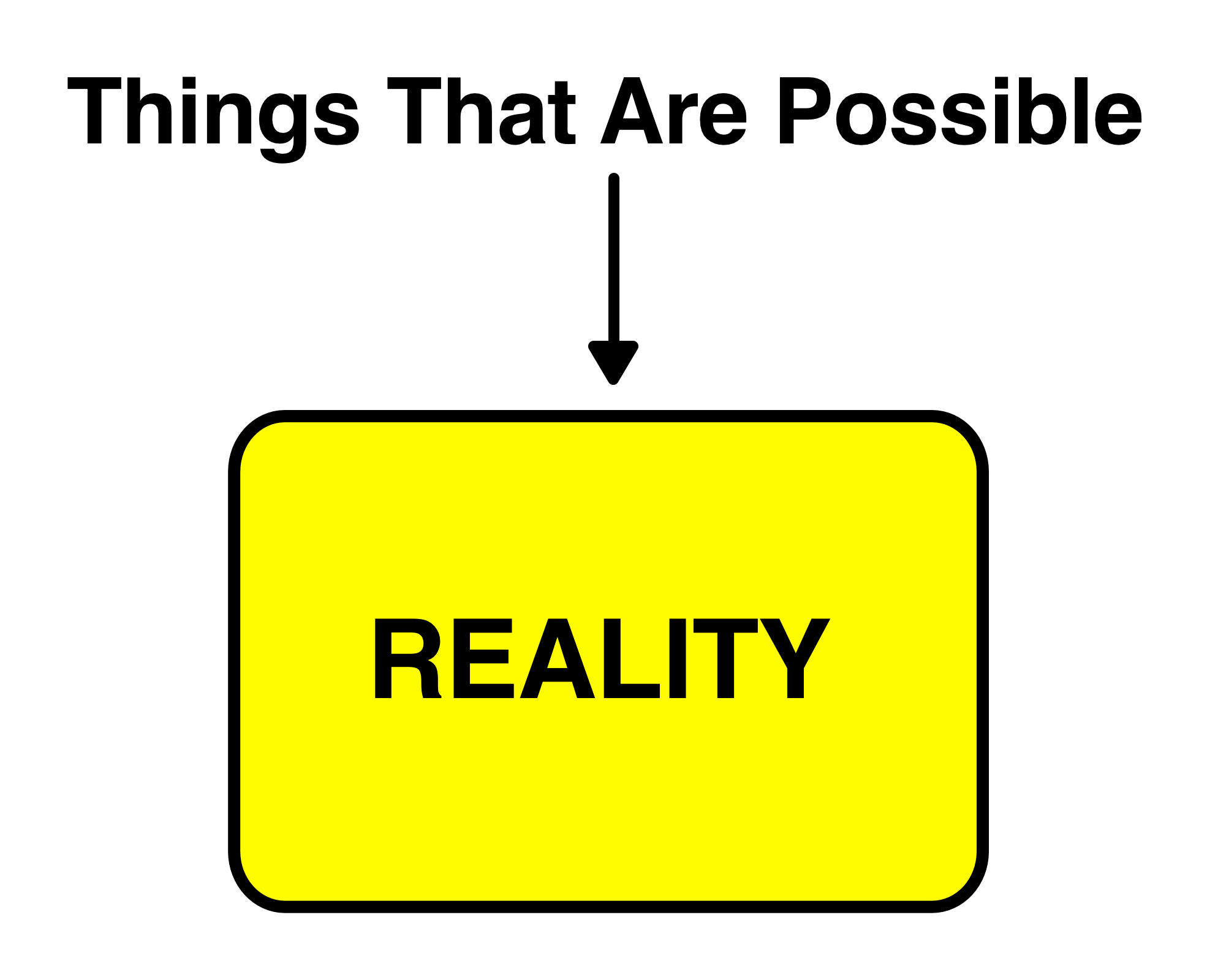
Now imagine a second box called the Reality Box. This one contains your honest assessment of what's possible -- what the world actually allows, given your skills, resources, and circumstances.
The place where these boxes overlap? That's your Goal Pool. That's where meaningful, achievable goals live.
Here's your problem, Chloe: both of your boxes are a mess.
Let's start with the Want Box. You say you want:
- A nice house
- Lots of money
- Comfort
- To not work too hard
- Your husband to provide these things
I want to ask you a question about each of these, and I want you to answer honestly.
A nice house. When you imagine this house -- really picture it -- do you feel a surge of deep, meaningful desire? Or do you feel something more like... relief? Like, "If I had that, people would see I'm doing well. I'd feel safe." There's a big difference between wanting something because it represents meaning to you and wanting it because it represents safety or status. The first is an examined want. The second is dogma wearing a want costume.
Lots of money. Why? What would you do with it? If the answer is "buy the nice house and be comfortable," then money isn't actually a want -- it's a means to the comfort-and-status package. But if the answer is "fund my creative projects, travel to NYC, have the freedom to take risks" -- that's a different kind of want entirely. And it requires a different kind of pursuit.
Comfort. This one is the sneakiest. Comfort feels like a reasonable thing to want. But comfort is also the exact mechanism that's keeping you on the couch. Comfort says, "Don't try the hard thing. Stay where it's safe. Scroll Instagram -- that's comfortable. Don't make a video -- that's uncomfortable." Your desire for comfort is directly at war with your desire to create and grow. You have to pick.
Your husband should provide. Says who? Where did this belief come from? Is it something you arrived at through careful reasoning? Or is it something you absorbed from family, from culture, from some template of what a marriage is supposed to look like? Because functionally, this belief does something very specific: it absolves you of responsibility for your own life. If he's supposed to provide, then you don't have to figure out how to provide for yourself. And if you don't have to figure that out, you don't have to take risks. And if you don't have to take risks, you never have to face the possibility of failure. It's a beautifully constructed cage, and you built it out of dogma.
Now here are the wants I think are actually yours -- the ones that scare you, the ones you whisper about instead of proclaim:
- I want to be a content creator
- I want to move to New York City
- I want to feel creatively alive
- I want people to see and care about what I make
- I want to stop feeling like I'm wasting my potential
These wants are terrifying because they require vulnerability. They require you to try and possibly fail in public. They require you to leave the recipe behind and start cooking from scratch. But I believe these are the real ones, Chloe. And until you put them in the Want Box and take the inherited ones out, your Goal Pool will keep producing goals that feel like obligations instead of aspirations.
The Reality Box: What's Actually Possible vs. What Fear Tells You
Your Reality Box is supposed to be a sober, accurate assessment of what's achievable. But yours has been distorted by fear until it's almost unrecognizable.
Let's reality-check a few things:
"I can't be a content creator." Why not? You've already made videos. You acknowledged they were cool. The gap between "made a few cool videos" and "content creator" is not talent -- you have talent. It's not equipment -- phones shoot professional-quality video. It's not knowledge -- everything you need to learn about editing, platforms, audience-building is available for free online. The gap is consistency and willingness to be bad for a while. That's it. That's the whole gap.
The creator economy is massive and growing. People with less talent and fewer resources than you are building audiences every day. This is in your Reality Box. But fear has crossed it out.
"I can't move to NYC." People move to NYC from literally every country on Earth. People with less money, fewer skills, no partner, no English fluency. It is logistically and financially possible for you. Would it be easy? No. Would it require sacrifice and planning and discomfort? Yes. But "hard" and "impossible" are completely different things, and your fear has been conflating them.
"I can't leave VNG." You've been there four years. You have experience, skills, and a resume. The job market exists. Other companies exist. Some of them might even be in industries you care about, or in New York, or flexible enough to let you build a content creation practice on the side. You are not chained to this desk. You are choosing it, every day, because the recipe says to stay.
"I can't stop scrolling Instagram." This one feels the most fixed and immovable, but it's actually the most changeable. Screen time limits, app blockers, phone-in-another-room strategies, replacing the habit with something else -- these are all well-documented, effective approaches. You don't need supernatural willpower. You need a system. The fact that you feel addicted isn't evidence that you're weak. It's evidence that you're human and the app is designed by thousands of engineers to be as addictive as possible. Give yourself a break on this one. But also -- address it, because it's eating your life.
The Feedback Loop: Your Most Important Tool (That You Stopped Using)
This is where things get really practical.
A feedback loop is the engine of all progress. It works like this:
1. You try something (an experiment)
2. You observe the results (data)
3. You adjust your approach based on what you learned
4. You try again
That's it. It's how scientists make discoveries, how businesses find product-market fit, how babies learn to walk, how every skill in human history has been developed.
Now here's what happened with your content creation journey:
You made a few videos. Those were experiments. They produced data -- you learned something about what you're good at, what resonated, how the creative process feels, what tools you like working with. You were in the feedback loop. You were iterating.
And then you stopped.
Why? Because the feedback loop is uncomfortable. Every experiment carries the risk of failure. Every piece of data might tell you something you don't want to hear. The feedback loop requires you to be vulnerable, to be a beginner, to be imperfect in public.
So you replaced it with the Instagram loop. And here's why that's so devastating: the Instagram loop mimics the feedback loop without any of the growth. You scroll, you see something interesting, it triggers a little dopamine hit, you scroll more. It feels like engagement. It feels like you're doing something. But you're not collecting any data about yourself. You're not experimenting. You're not iterating. You're consuming, and consuming, and consuming, and nothing changes.
Two hours a night. Let's do the math:
- 14 hours a week
- 60 hours a month
- 730 hours a year
Seven hundred and thirty hours. That's the equivalent of eighteen 40-hour work weeks. Nearly five months of full-time work, spent watching other people's content instead of making your own.
Imagine -- truly imagine -- what you could build with 730 hours of creative work per year. You could produce hundreds of videos. You could master editing software. You could build a meaningful following. You could develop a creative voice. You could become the content creator you say you want to be.
I'm not saying you need to convert all of that time. Even a quarter of it -- 180 hours a year, roughly 30 minutes a day -- would transform your trajectory. But you have to re-enter the feedback loop. You have to start experimenting again.
Naming the Dogma
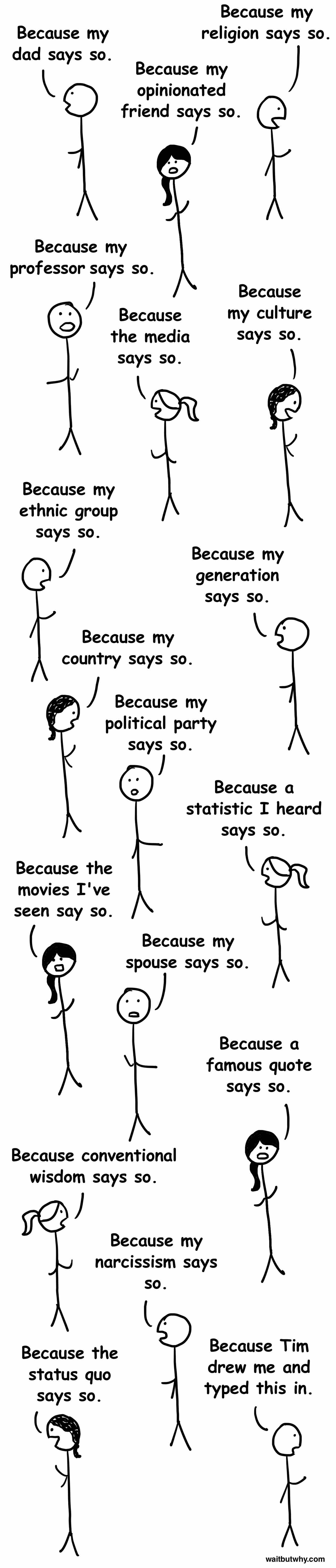
Dogma is what happens when a belief goes unexamined for so long that it starts feeling like a fact. It calcifies. It becomes invisible. You don't even notice it's there, the way you don't notice the air you breathe.
Chloe, you are running on a lot of dogma. And the first step to freedom is naming it. So let's name it.
Dogma #1: "I'm lazy."
This is the most dangerous belief you hold, because it masquerades as self-awareness. It sounds honest. It sounds like you're bravely acknowledging a flaw.
But "I'm lazy" is not a fact. It's a story. And it's a very convenient story, because if laziness is just who you are -- a fixed trait, part of your identity -- then there's nothing to be done. You can't fix lazy. You're off the hook.
But you're not lazy. You showed up to a job you hate for four years. That takes discipline. You're not lazy -- you're avoidant. Specifically, you're avoiding things that might prove you're not good enough. Making content means risking rejection. Moving to NYC means risking failure in a bigger arena. Leaving VNG means risking instability.
Avoidance looks exactly like laziness from the outside. But avoidance is driven by fear, and fear can be worked with. Laziness as identity cannot.
Stop telling yourself you're lazy. Start telling yourself the truth: I'm afraid, and the fear is making me avoid the things I actually want.
Dogma #2: "My husband should provide the comfortable life."
Where did this come from? Think carefully. Did you reason your way to this conclusion? Did you examine different models of partnership and decide that a traditional provider dynamic was the one that would make you happiest?
Or did you absorb it? From your family? From your culture? From the template of what a "good" marriage looks like in the world you grew up in?
This belief isn't just unfair to your husband -- it's devastating to you. Because as long as you hold it, you never have to take responsibility for building your own financial security, your own career, your own dreams. It outsources the entire project of your life to someone else.
And it puts you in an impossible bind with your husband specifically. He's a first-principles thinker. A chef. Someone who will never be happy following the stable-provider recipe. So you're either going to resent him forever for being who he is, or you're going to release this dogma and start building alongside him instead of waiting for him to build for you.
Dogma #3: "I need to feel ready before I start."
You will never feel ready. I need you to hear this. You will never feel ready.
Readiness is not a feeling. It's a decision. No one who ever started a creative career, moved to a new city, or changed their life felt ready when they began. They felt terrified. They felt unprepared. They felt like frauds. And they started anyway.
Waiting to feel ready is just another form of avoidance dressed up as prudence.
Dogma #4: "If people don't reach out to me, they don't care."
You feel like few people care about you. But have you considered that connection is a two-way feedback loop? That relationships require experiments and iteration just like creative work? That the people you think don't care might be waiting for you to reach out, interpreting your silence as disinterest?
This dogma isolates you, which drives you further into Instagram, which isolates you more. It's a vicious cycle built on an unexamined assumption.
Dogma #5: "I don't have dreams like my husband does."
You do. Content creation. NYC. Creative work. A life that excites you. You have dreams. What you don't have is permission -- from yourself -- to take them seriously.
Pickleball and What It Tells You
Here's a small but important detail: you play pickleball as an escape. When you're on the court, something shifts. You're present. You're engaged. You're not scrolling. You're not ruminating about work or your husband or your future.
Why? Because pickleball puts you in a feedback loop. You serve, you see what happens, you adjust. Point by point, game by game. It's immediate, it's tangible, and there's no room for your inner critic because you're too busy reacting.
Content creation can feel like that too. When you're in the flow of editing a video, when you're crafting a story, when you're figuring out the right cut or the right transition -- that's the same state. It's flow. It's presence. It's the antidote to the couch.
You already know what it feels like to be in the loop. You just need to enter it for the things that actually matter to your future.
The Husband Conversation You Need to Have
I think there's a conversation you and your husband need to have, but it's not the one you think.
The conversation isn't "Why can't you just get a stable job and provide for us?" That's the cook talking. That's the recipe demanding compliance.
The conversation is: "I think I've been following a recipe for my life that isn't working, and I'm scared to throw it out. You seem to know how to reason from first principles. Can you help me figure out what I actually want?"
Your husband has spent a decade practicing the skill you most need to learn. Instead of resenting his independence, lean into it. Ask him how he thinks about decisions. Ask him how he deals with the fear of failure. Ask him what it felt like to spend ten years on a startup that didn't work out and still be willing to try new things.
He's not your adversary. He's your best case study.
A Practical Path Forward
I'm not going to give you a recipe. That would make me a cook, and it would make you one too. But I can give you a framework for thinking like a chef about your own life.
Step 1: Audit your Want Box this week.
Get a physical notebook. Not your phone. Set a timer for 30 minutes. Write down everything you want -- without filtering, without judging, without worrying about whether it's realistic. Then go back through the list and mark each item: Is this an examined want (something you've thought deeply about and genuinely desire) or an inherited want (something you absorbed from family, culture, or Instagram)?
You might be surprised by what you find.
Step 2: Make one video this week.
Not a masterpiece. An experiment. Five minutes of raw footage cut together into something you find interesting. Post it or don't -- the posting isn't the point right now. The point is re-entering the feedback loop. The point is collecting data. The point is reminding yourself that you can create, and that creating feels better than consuming.
Step 3: Track your Instagram time and redirect 30 minutes of it.
Don't try to go cold turkey. That's another recipe. Instead, notice when you're scrolling and consciously redirect 30 minutes toward something generative. Edit a video. Research NYC neighborhoods. Write in your notebook. Read about content strategy. Anything that puts you in a feedback loop instead of a consumption loop.
Step 4: Name the dogma in real time.
When you catch yourself thinking "I'm just lazy," pause. Say to yourself: That's dogma. The truth is I'm afraid. When you think "He should be providing," pause. Say: That's an inherited belief. What do I actually think about how partnership should work?
You don't have to resolve these in the moment. Just name them. Naming breaks the spell.
Step 5: Have the conversation with your husband.
Not from a place of resentment. From a place of genuine curiosity. Tell him you've been thinking about how you make decisions, and you realize you've been following a recipe that isn't working. See what happens.
The Voice on the Couch
Chloe, I want to end with that voice. The one that whispers while you're scrolling. The one that says, This isn't it. This isn't who I'm supposed to be. I'm wasting something.
That voice is not your enemy. That voice is your chef. She's been locked in the kitchen for years while the cook runs the restaurant, and she's getting louder because the cook's recipes are failing and she knows she could do better.
She's the one who made those videos. She's the one who dreams about NYC. She's the one who feels a spark on the pickleball court. She's the one who knows, with a certainty you can't explain, that there's more to your life than a job you hate and a couch you can't leave.
Stop telling her she's lazy. Stop telling her to wait until she's ready. Stop telling her that someone else should build the life she wants.
Give her the kitchen. Let her cook.
Not perfectly. Not with a guaranteed recipe. But from first principles, with her own ingredients, making her own mistakes, collecting her own data, iterating her way toward something that actually tastes like her.
You already know what you need to do, Chloe. The fact that it scares you is not a reason to avoid it. It's evidence that it matters.
Start.